
Residential Mental Health Treatment Program for Adults 18+
Residential treatment usually is the best level of care for individuals leaving a hospital or locked psychiatric acute care facility. Adult clients who admit to the residential treatment program typically stay at the residential level of care for about 8 to 10 weeks before stepping down to day treatment.
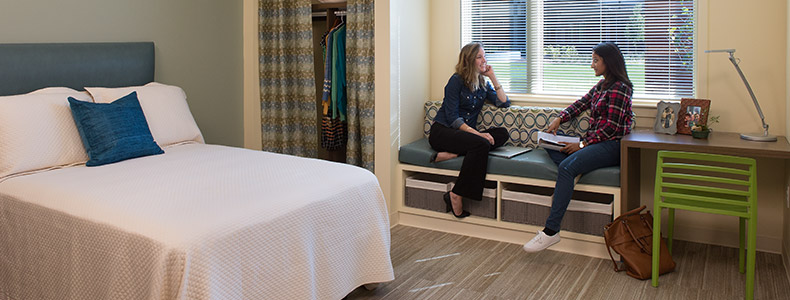
We offer longer lengths of stay, giving our clients the time and space they need to recover, and a tailored mix of evidence-based and supportive therapies to help each client find their own unique path to wellness.
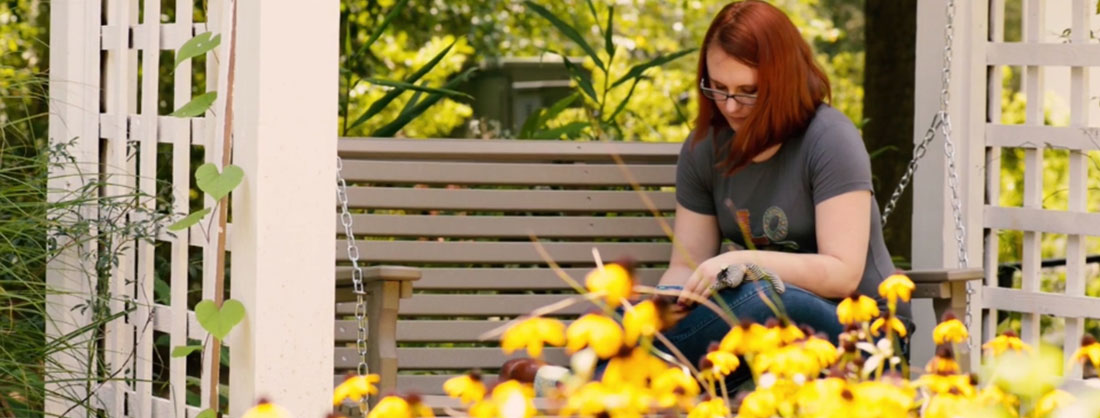
Residences with Private Bedrooms
Clients admit to one of two adult residences depending on bed availability. All adult residential clients come to the Rollins Campus and adjacent Charles B. West Campus Monday through Friday for treatment activities and meals.
Rollins Campus
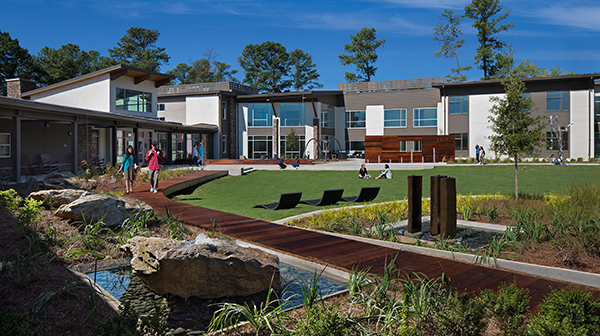
The Rollins Campus has 32 private bedrooms and bathrooms and 24/7 nursing staff support. The facility is surrounded by gardens and recreational spaces.
South Campus
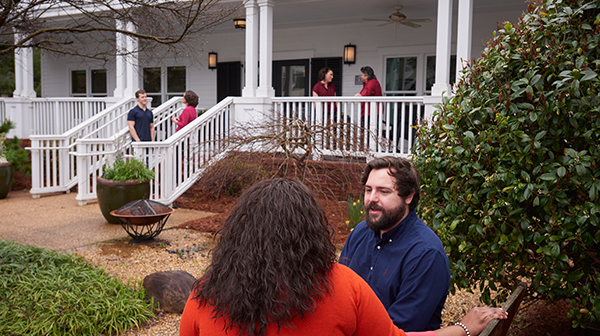
Skyland Trail South residential campus includes 24 units, each with a private bedroom and bathroom. An adjoining garden provides space for outdoor reflection.
Specialized Psychiatric Care
Our recovery communities provide individualized, evidence-based treatment by diagnosis. Together with our integrated wellness model and holistic approach, this powerful combination provides a unique path to recovery for each individual client.
In addition to a robust diagnostic assessment at admission, clients complete assessments throughout treatment. Psychological testing with our team may be recommended for improved diagnostic clarity.
Structured Daily Schedules
Residential clients living at South and Rollins come to the Charles B. West Campus from 10:00 a.m. to 4:00 p.m. each weekday for psychiatric services and therapy sessions.
While multiple groups are offered each hour, counselors work with each client to develop an individualized schedule based on the client's diagnoses, as well as identified opportunities for growth and skill building.
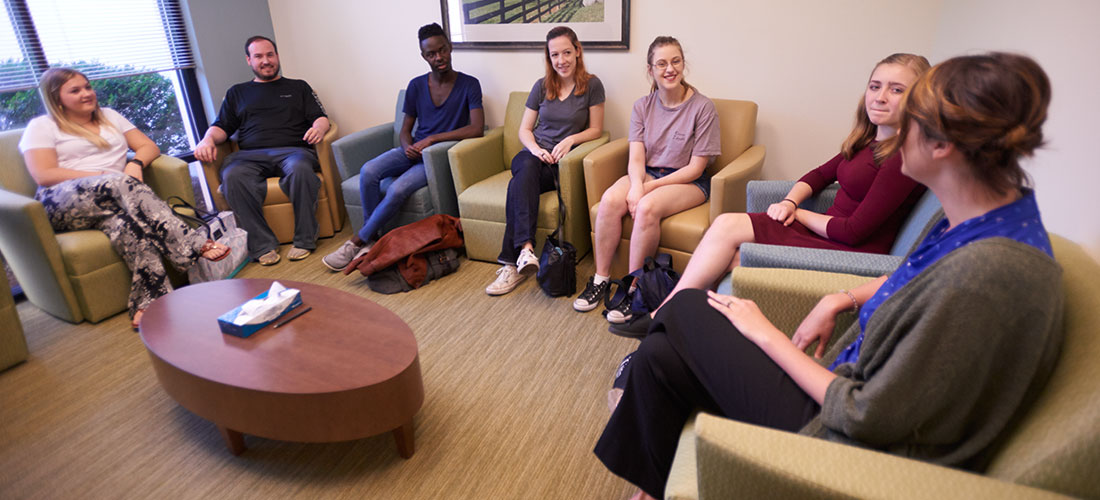
Some groups help clients establish foundational skills or healthy living routines. The clients who participate in these groups are a mix of ages, genders, and diagnoses.
Other groups are more specialized and focus on topics specific to smaller groups of clients who have similar challenges. These groups are often process or support groups and include, men's group, women's group, loss and grief, dual recovery anonymous, LGBTQ support group, BIPOC support group, healthy relationships in middle to late adulthood, and healthy relationships in young adulthood.
What does a treatment day look like?
View an example residential treatment schedule.
Reset to Healthy Living
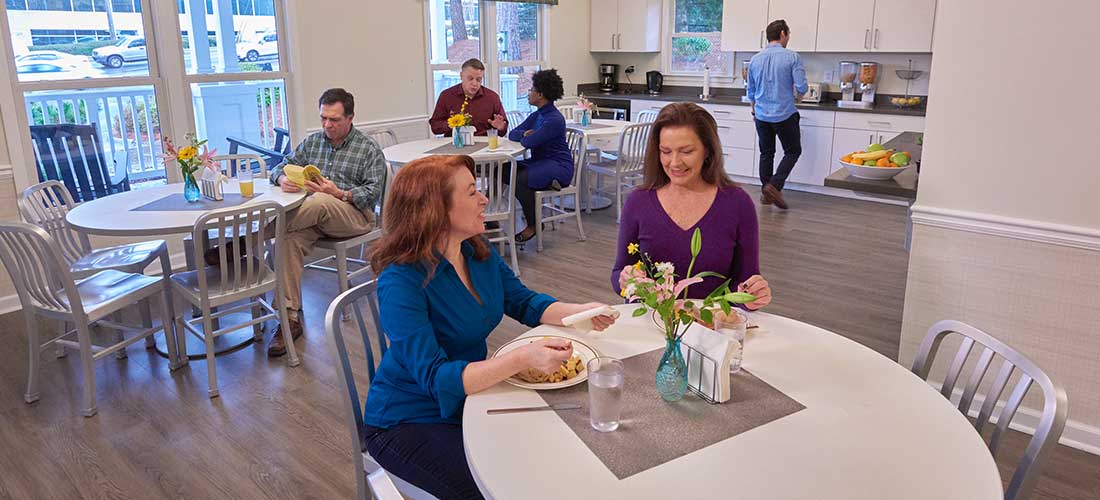
On evenings and weekends, our residential staff help clients work on re-establishing healthy sleep and meal schedules, self care and hygiene, medication adherence, and healthy social and recreational activities. Our skilled and caring residential staff ensure that our clients are safe, supported, and are taking their medications as prescribed.
Clients in our mental health residential treatment programs also participate in our LEAP program which offers evening activities on Tuesdays and Thursdays along with activities on campus and in the community on weekends, including trips to Atlanta museums, sporting events, restaurants, and community events.
Residential activities are all focused on helping clients prepare for independence and life outside of treatment.
Integrated, Holistic Approach
Complementary adjunctive therapy sessions – art, music, horticulture, and recreation – encourage client engagement in therapy and give clients opportunities to practice the skills they are learning in their individual and core group sessions.
Weekly schedules also include groups focused on workforce and school readiness, nutrition counseling, sober living, mindfulness, healthy relationships, exercise and sports, and positive use of free time.
Our integrated, holistic model is what makes Skyland Trail one of the best residential treatment centers in the country. All the components of our psychiatric, therapeutic and residential mental health programs work together to help our clients reclaim their lives. By helping them define who they are and who they want to be in addition to practical skills for managing their mental illness, we give our clients the best chance at long term and sustained recovery.
Our Continuum of Care
Chris Cline, LCSW, senior vice president of clinical services for adult treatment programs, explains how adult clients move through the continuum of care, beginning with residential treatment.
Expected Length of Stay
Clients typically stay in residential treatment program level of care for about 6 to 8 weeks. Most clients then step down to our day treatment program where they continue to work toward independence for several weeks before transitioning to our intensive outpatient program for another two to six weeks. The total average length of treatment for clients admitting to residential treatment is about 12 to 16 weeks (3-4 months). (Please note that clients in our DBT program enroll in a defined 90-day treatment program.)
Costs of Treatment
Total treatment costs depend on the level of care required and the number of days needed to complete treatment. Our residential treatment program is in-network with most major private insurance providers. Skyland Trail treatment programs are not covered by Medicare or Medicaid. Many client families use a combination of insurance, private pay, and financial aid awards (if eligible) to cover the costs of treatment. Financial counselors are available to help families understand their potential financial responsibility prior to admission.
Next Steps After Residential Treatment
Most clients step down to our day treatment program after completing the residential level of care. Transitional housing may be available to day treatment clients if approved by the treatment team.
Clients in our dual diagnosis program are not eligible for our transitional housing program. When dual diagnoses clients step down to day treatment, they likely will be referred to a recovery residence or sober living community. These specialized living communities provide appropriate support to help clients maintain sobriety during treatment.